The chapter, Interlopers in the Land of Sunshine, was about Chinatown in the 19th century. In the chapter, Chinatown is referred to as the “rotten spot” of Los Angeles. This chapter also contained information about the development of Los Angeles and information about health care in the city. It also contained information about the development of railroads.
The chapter, Caught Between Discourses of Disease, Health, and Nation, focused on immigration in America throughout the years. Most of the chapter contained information about Los Angeles in the early 20th century. This chapter contained information that mainly pertained to people’s reactions to immigration and the problems it supposedly caused. According to the chapter, people in Los Angeles thought immigrants were to blame for the spread of disease. The real problem was overpopulation and poor living conditions in the city. Living conditions in Los Angeles had to be improved. This chapter also contained information about the state of health care in the city. Both of these chapters were very interesting and informative. They were well written and contained plenty of useful information.
Saturday, September 24, 2011

Wednesday, September 14, 2011
Article Response
Most of the stories that we read seem to be about equality of the need for equality in society. The story “Harrison Bergeron” seems to be the most interesting. I think the story raises a few questions about equality.
The story takes place in the future. The government could possibly be described as dystopian or communist. Everybody has been given certain handicaps in order to create an equal society. No one was stronger than another and no one was smarter than another.
I think the setting of the story suggests there could be a limit to how equal a society can be. Though equality is good, there could be such a thing as too much equality. There could be a point where a society has so much equality there’s limited freedom.
There could be a possibility that the society in Harrison Bergeron isn’t equal at all. For example, Hazel is somewhat envious of George’s handicap, a hearing aid that plays loud noises to block out the wearers thoughts. The text says “’I’d think it would be interesting, hearing all the different sounds,’ said Hazel a little envious.” This means if one person is envious of another in a supposedly equal society, there whole society could be flawed.
Another example of false equality could be the fact that the ballerina that is considered the most beautiful has to wear the ugliest mask. Shouldn’t all the ballet dancers be wearing the same mask? If the ugliness of their masks are determined by how beautiful they are, wouldn’t people be able to tell their beautiful anyway? Furthermore, the idea of beauty can be based entirely on one’s own opinion.
The story “Harrison Bergeron” raises the question, what is the definition of equality? There might not be one true definition of equality. It could be based entirely on opinion. Therefore, true equality in society cannot actually be achieved.
The story takes place in the future. The government could possibly be described as dystopian or communist. Everybody has been given certain handicaps in order to create an equal society. No one was stronger than another and no one was smarter than another.
I think the setting of the story suggests there could be a limit to how equal a society can be. Though equality is good, there could be such a thing as too much equality. There could be a point where a society has so much equality there’s limited freedom.
There could be a possibility that the society in Harrison Bergeron isn’t equal at all. For example, Hazel is somewhat envious of George’s handicap, a hearing aid that plays loud noises to block out the wearers thoughts. The text says “’I’d think it would be interesting, hearing all the different sounds,’ said Hazel a little envious.” This means if one person is envious of another in a supposedly equal society, there whole society could be flawed.
Another example of false equality could be the fact that the ballerina that is considered the most beautiful has to wear the ugliest mask. Shouldn’t all the ballet dancers be wearing the same mask? If the ugliness of their masks are determined by how beautiful they are, wouldn’t people be able to tell their beautiful anyway? Furthermore, the idea of beauty can be based entirely on one’s own opinion.
The story “Harrison Bergeron” raises the question, what is the definition of equality? There might not be one true definition of equality. It could be based entirely on opinion. Therefore, true equality in society cannot actually be achieved.
Friday, April 29, 2011
Semester 2 Blog 12
WWII letter response.
Frebruary 26, 1945
Dear George,
It's so great to hear from you again! I'm so happy your ok! I've been doing fine here at home. It's just me and our little girl getting by. She's grown a lot this past year.
Regina still wants to join the army. I've been trying to talk her out of it. I even told her you said it wasn't worth it. She just won't listen. I jus couldn't stand to see another person I know end up fighting in another war.
You've been planning to invade Iwo Jima? George, not a day goes by where I don't worry about you. Please come home safely. I miss you. We all miss you.
Love Emily
Frebruary 26, 1945
Dear George,
It's so great to hear from you again! I'm so happy your ok! I've been doing fine here at home. It's just me and our little girl getting by. She's grown a lot this past year.
Regina still wants to join the army. I've been trying to talk her out of it. I even told her you said it wasn't worth it. She just won't listen. I jus couldn't stand to see another person I know end up fighting in another war.
You've been planning to invade Iwo Jima? George, not a day goes by where I don't worry about you. Please come home safely. I miss you. We all miss you.
Love Emily
Tuesday, April 19, 2011
Semester 2 Blog 10
I don't think my family was ever impacted by World War II. I don't think anybody in my family fought during the war.
Thursday, April 14, 2011
WW2 Imagery
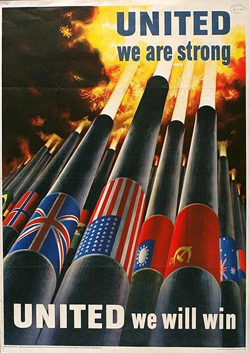
This picture is a motivational symbol for the Allies at war.

This is a propaganda poster for the Axis powers.

A picture of what seems to be a motivational warning.
Tuesday, March 15, 2011
Semester 2 Blog 7
Since I interned at a museum, I would say working there in the 1970's or 80's wouldn't be very different from working there today. There would still be plenty of museum artifacts and photos to keep track of. The museum's digital archives probably wouldn't escist. It it did escist back then it would be harder to manage.
Working at the museum in the 1950's or 60's would probably be very different. The museum's collection of photos and artifacts would me a lot smaller. There would me no digital archive. I'm not even sure the museum would excist.
Working at the museum in the 1950's or 60's would probably be very different. The museum's collection of photos and artifacts would me a lot smaller. There would me no digital archive. I'm not even sure the museum would excist.
Semester 2 Blog 6
http://tapandhthma.blogspot.com/2011/02/semester-2-blog-5.html
I think the first pitch here would make an interesting article. The statement, "People tend to be more robotic than human in their work" is very interesting. For some careers this statement could be true.
http://drodriguez-drodriguez.blogspot.com/2011/02/blog-5.html
All of these pitches could make an interesting article. These pitches could probably be combined into one article.
http://shoshmahgosh.blogspot.com/2011/02/blog-4_22.html
These pitches could be combined into an interesting and informative article. It could be a big help for future interns.
I think the first pitch here would make an interesting article. The statement, "People tend to be more robotic than human in their work" is very interesting. For some careers this statement could be true.
http://drodriguez-drodriguez.blogspot.com/2011/02/blog-5.html
All of these pitches could make an interesting article. These pitches could probably be combined into one article.
http://shoshmahgosh.blogspot.com/2011/02/blog-4_22.html
These pitches could be combined into an interesting and informative article. It could be a big help for future interns.
Friday, February 25, 2011
Semester 2 Blog 5
I could write about my experiences in a day working at my internship.
I could write about a certain event at my internship.
I could write about my overall internship experience.
I could write about a certain event at my internship.
I could write about my overall internship experience.
Semester 2 Blog 3
http://www.strangehorizons.com/2003/20030609/harrison.shtml
The intro to this article contains information on the person being interviewed. The article is written in a question and and answer format and contains quotes from what they said in the interview.
http://howto.wired.com/wiki/Interview_a_person_for_an_article
This is an example of how an interview can be formatted. It says questions about similar topics should be grouped together.
The intro to this article contains information on the person being interviewed. The article is written in a question and and answer format and contains quotes from what they said in the interview.
http://howto.wired.com/wiki/Interview_a_person_for_an_article
This is an example of how an interview can be formatted. It says questions about similar topics should be grouped together.
Semester 2 Blog 1
I found my internship very repetitive. It was an easy job but it was somewhat boring, so I'm sure I don't want to have a career like that.
My plan for the semester is to pass it.
My plan for the semester is to pass it.
Wednesday, January 26, 2011
Internship week 4
9. I don't think I would pursue this career. I never saw myself working at a museum. Over the past few weeks, the job that I had at the museum was repetitive. I was always taking pictures of objects and photographs in order to update the museum archives. The museum did obtain some new artifacts that I found interesting but this didn't happen often. I would want to pursue a career that isn't repetitive.
Internship week 3 Post 2

8. Most of the time I see everyone working alone but they do have conversations with each other. Their conversation don't seem to pertain to their work though. Conversations between employees are mainly about what's going on in their lives outside of work. I don't think their work requires any sort of collaboration. The employees usually work by themselves on computers.
Internship week 3 Post 1
5. The museum benefits from the work I do at the internship. I'm working as a volunteer, so I work on the museum archives and the company doesn't have to pay me. It seems to me like I do the work that the employees don't want to do. The work is easy so I'm not complaining.
Internship week 2 Post 2
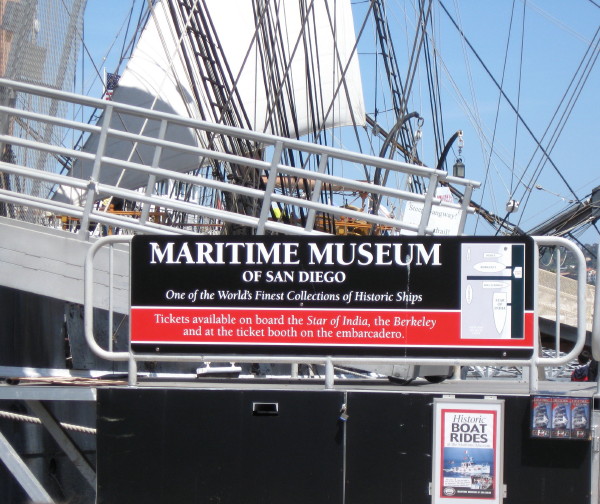
9. I don't see myself working at a museum like this in the future. the tasks I have been given here easy nut repetitive. I wouldn't want a career where I'm stuck doing the exact same thing every day.
Internship week 2 Post 1
4. I don't think this internship will change anything for my future career. I've never considered working in a museum. I prefer a career where I'm not stuck doing the exact same thing every day.
Internship week 1 Post 2
7. One thing that surprised me was how easy the first week was. My job was to update the museum's archive. All I had to do was upload photos onto a computer.
Internship week 1 Post 1
6. The employees at the Maritime Museum seem to work on their own. I mostly see them working on computers or organizing the museum archives. Sometimes I hear them having conversations which are often about things that seem unrelated to their work. The amount of people working at the museum varies throughout the week. On some days there are a lot of employees present and on other days there are only a few.
Subscribe to:
Comments (Atom)